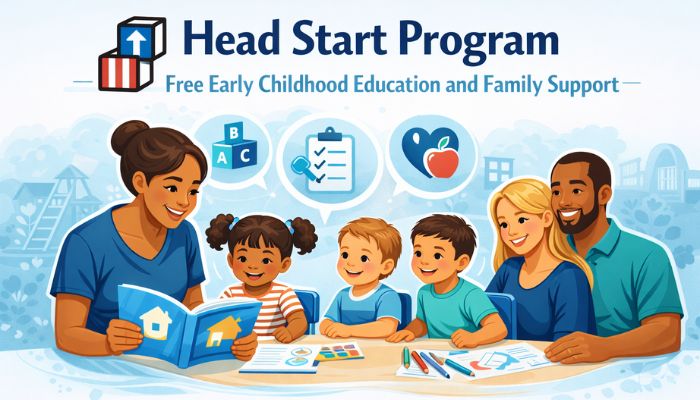
The Head Start program is one of the most valuable government-funded education and child development initiatives in the United States. Designed to help low-income families, Head Start provides free early childhood education, health services, nutrition assistance, and family support to children from birth to age five.
You might be interested in: LIHEAP
For millions of families across America, this program offers an opportunity to prepare children for academic success while also helping parents access important social services and financial support resources. As childcare costs continue to rise, Head Start remains a critical solution for parents searching for affordable preschool programs and quality early education opportunities.
Families looking for free preschool programs, childcare assistance, and school readiness support often discover that Head Start can provide life-changing benefits for both children and parents.
What Is Head Start?
Head Start is a federally funded early childhood education program managed by the U.S. Department of Health and Human Services. The program was created to support children from low-income households by providing educational, emotional, nutritional, and healthcare services before they enter kindergarten.
The primary goal of Head Start is to improve school readiness and help children build strong cognitive, social, and emotional skills during their early developmental years.
Head Start services may include:
- Free preschool education
- Child development programs
- Health screenings
- Nutritional meals and snacks
- Dental and vision services
- Family counseling and support
- Disability support services
The program also encourages strong parent involvement, helping families become active participants in their children’s education and long-term success.
Who Qualifies for Head Start?
Eligibility for Head Start depends mainly on household income and family circumstances. In general, families with low income levels may qualify for free services.
Children may be eligible if:
- They are between birth and age five
- Their family meets federal poverty guidelines
- They are experiencing homelessness
- They are in foster care
- Their family receives public assistance benefits such as TANF or SNAP
Some Head Start centers may also prioritize:
- Children with disabilities
- Single-parent households
- Families facing financial hardship
- Migrant or seasonal worker families
Because availability varies by location, families are encouraged to apply early and contact their local Head Start provider for specific enrollment information.
Benefits of the Head Start Program
Head Start offers far more than traditional childcare services. The program focuses on the complete well-being of the child and family.
Early Childhood Education
Children participate in structured learning activities designed to develop:
- Reading readiness
- Language skills
- Mathematics foundations
- Social interaction
- Problem-solving abilities
Research shows that quality early childhood education can improve long-term academic performance and future career opportunities.
Free Meals and Nutrition Support
Many Head Start centers provide healthy meals and snacks that support child development and proper nutrition.
For low-income families, this nutritional support can help reduce food insecurity while promoting healthier eating habits.
Medical and Dental Services
Head Start programs often include:
- Health checkups
- Vision screenings
- Dental exams
- Mental health services
These resources help identify developmental or medical concerns early, giving children access to necessary care before entering elementary school.
Early Head Start: Support for Infants and Toddlers
In addition to preschool services, the program also offers Early Head Start for infants, toddlers, and pregnant women.
Early Head Start focuses on:
- Child development from birth to age three
- Parenting education
- Prenatal care support
- Infant health services
- Emotional and social development
This program helps parents create a stable and nurturing environment during a child’s most important developmental stages.
For young families searching for affordable childcare assistance and parenting support programs, Early Head Start can provide valuable resources and guidance.
How to Apply for Head Start
Applying for Head Start is typically simple and free. Families can apply through local community agencies or Head Start centers in their area.
Applicants may need:
- Proof of income
- Birth certificates
- Immunization records
- Proof of residency
- Government assistance documentation
Many locations now allow online applications, making enrollment more accessible for busy parents.
Because demand for free preschool programs is often high, families should begin the application process as early as possible.
Why Head Start Is Important for Low-Income Families
The rising cost of childcare and preschool education has made programs like Head Start increasingly important in the United States.
Many families struggle to afford:
- Preschool tuition
- Daycare expenses
- Medical care
- Nutritional support
Head Start helps reduce these financial burdens while giving children a strong educational foundation.
The program also supports working parents by providing reliable childcare services that allow adults to pursue employment, job training, or educational opportunities.
For many households, Head Start becomes an essential part of achieving greater financial stability and long-term success.
Long-Term Benefits of Head Start Participation
Studies have shown that children who participate in Head Start programs often experience positive long-term outcomes, including:
- Improved school readiness
- Better academic performance
- Increased high school graduation rates
- Higher college attendance rates
- Improved social skills
Parents may also benefit from:
- Employment assistance
- Parenting education
- Community resources
- Family counseling services
These long-term advantages make Head Start one of the most impactful government assistance programs for children and families in the United States.