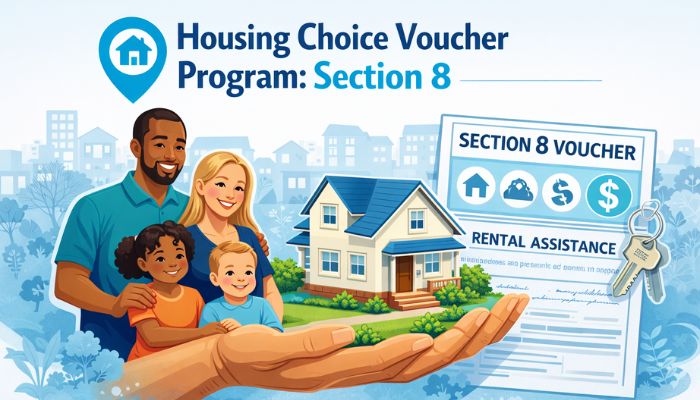
Securing safe, affordable, and high-quality housing is one of the most significant financial milestones for any household. However, with skyrocketing real estate prices and rising rental costs across the nation, finding low-income housing that fits a modest budget can feel like an uphill battle. Fortunately, the Housing Choice Voucher Program (Section 8) stands as America’s premier federal housing assistance initiative, helping millions of low-income families, elderly citizens, and individuals with disabilities secure decent, sanitary, and affordable housing in the private market.
You might be interested in: Temporary Assistance for Needy Families (TANF) Program
If you are looking to lower your monthly rent, discover open Section 8 waiting lists, or understand how to navigate the affordable housing application process, this comprehensive guide covers everything you need to know about maximizing your federal housing vouchers today.
What is the Section 8 Housing Choice Voucher Program?
The Housing Choice Voucher Program, widely referred to as Section 8, is a federal government program funded by the U.S. Department of Housing and Urban Development (HUD). Although it is funded at the national level, the program is administered locally by thousands of individual state and municipal Public Housing Agencies (PHAs).
How the Voucher System Works in the Private Market
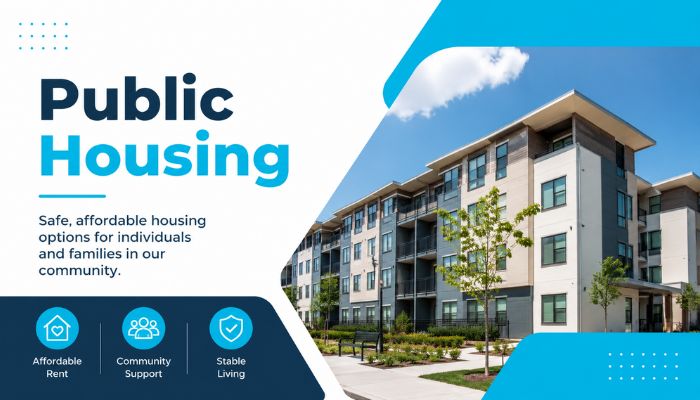
Unlike traditional public housing, which requires tenants to live in government-owned apartment complexes, the Section 8 voucher program gives participants complete mobility. Eligible families are free to choose their own rental housing, including single-family homes, townhouses, and private apartments.
Under federal guidelines, the tenant is responsible for finding a private landlord who participates in the program and whose property meets HUD’s strict Housing Quality Standards (HQS).
The Rental Subsidy Calculation
The financial mechanics of a housing voucher are highly lucrative for low-income tenants. Once a lease agreement is approved:
-
The tenant typically pays exactly 30% of their adjusted monthly gross income toward rent and utilities.
-
The Public Housing Agency pays the remaining balance directly to the landlord every month using federal funds.
-
This direct landlord rental subsidy guarantees that housing costs remain perfectly proportional to what the family can actually afford.
Navigating Section 8 Eligibility Requirements and Income Limits
Because the demand for federal housing assistance vastly exceeds the available federal budget, PHAs enforce strict eligibility benchmarks to ensure resources are targeted toward those who need them most.
Income Standards: Extremely Low vs. Very Low Income
Eligibility for a housing choice voucher is tied directly to the Area Median Income (AMI) of the specific county or metropolitan area where the applicant chooses to live. By law, a household’s income cannot exceed 50% of the AMI (classified as «very low income»).
Furthermore, federal regulations mandate that PHAs must allocate at least 75% of their available vouchers to applicants whose incomes do not exceed 30% of the AMI (classified as «extremely low income»).
Non-Financial Eligibility Factors
In addition to financial limits, local housing authorities verify specific non-financial criteria during the application screening process:
-
Family Status: The household must meet HUD’s legal definition of a family unit, which includes single individuals, families with children, and pregnant women.
-
Citizenship Status: Vouchers are strictly limited to U.S. citizens and specific categories of eligible non-citizens with legal immigration status.
-
Eviction and Criminal History: Applicants may be denied if a household member has been evicted from public housing within the past three years for drug-related criminal activity.
Mastering the Section 8 Application Process and Waiting Lists
Securing a voucher requires strategic planning, patience, and a thorough understanding of how local housing authorities manage their applicant pipelines.
The Challenge of Open Waiting Lists
Due to the massive popularity of the program, it is incredibly common for a PHA’s Section 8 waiting list to remain closed for months or even years at a time. When a local waiting list does open, it often remains accessible for only a brief period (sometimes just a few days). Smart applicants utilize online notification tools and national housing registries to track when local authorities are accepting new intake forms.
Local Preferences and Fast-Track Approval
To prioritize those in immediate danger, PHAs establish local preference criteria to move specific families to the top of the waiting list faster. You may receive priority points if your household is:
-
Currently experiencing homelessness or living in substandard conditions.
-
Involuntarily displaced due to natural disasters or government action.
-
Paying more than 50% of your total household income toward rent.
-
Composed of elderly individuals, domestic violence survivors, or veterans.
Step-by-Step Guide: How to Apply for Low-Income Housing Vouchers
-
Locate Your Local Housing Authority: Visit HUD’s official web portal to find the contact information and online links for the PHAs in your target area.
-
Submit a Preliminary Application: When a waiting list opens, fill out the initial forms completely, detailing your household size, current assets, and proof of gross income.
-
Complete the Screening Interview: Once your name reaches the top of the waiting list, you must attend an in-person or virtual interview to verify your documentation, including birth certificates, tax returns, and government-issued photo IDs.
-
Receive Your Voucher and Start Your Search: Upon final approval, you will be issued your official Housing Choice Voucher. You generally have between 60 and 120 days to locate an approved rental property before the voucher expires.