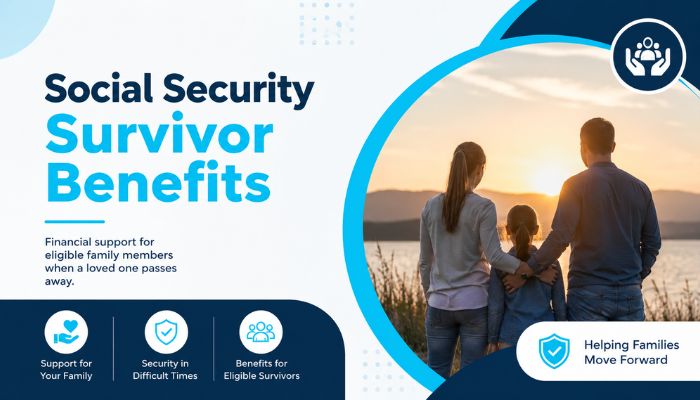
Social Security Survivor Benefits provide essential financial assistance for families who lose a spouse, parent, or primary income provider. These government benefits, managed by the Social Security Administration (SSA), help surviving family members maintain financial stability during emotionally and financially difficult times.
You might be interested in: Public Housing
For millions of Americans, survivor benefits help cover critical living expenses such as housing, food, healthcare, education, and childcare after the death of a loved one. As living costs continue to increase, these monthly payments play a major role in protecting vulnerable families from severe financial hardship.
Families searching for Social Security death benefits, survivor financial assistance, or monthly benefits for widows and children can greatly benefit from understanding how Social Security Survivor Benefits work and who may qualify.
What Are Social Security Survivor Benefits?
Social Security Survivor Benefits are monthly payments provided to eligible family members of deceased workers who paid Social Security taxes during their employment years.
These benefits are designed to replace part of the lost household income after the death of a worker and help surviving relatives maintain financial security.
Survivor benefits may be available to:
- Widows and widowers
- Dependent children
- Disabled adult children
- Divorced spouses under certain conditions
- Dependent parents in some situations
The amount received depends on the deceased worker’s earnings history and the survivor’s relationship to the worker.
Who Qualifies for Survivor Benefits?
Eligibility for Social Security Survivor Benefits depends on several factors, including:
- Relationship to the deceased worker
- Age
- Disability status
- Marital status
- Dependency
Benefits for Widows and Widowers
Spouses may qualify for survivor benefits if they:
- Were legally married to the deceased worker
- Meet minimum age requirements
- Have not remarried before a certain age in some cases
Widows and widowers may begin receiving reduced survivor benefits as early as age 60, or earlier if disabled.
Benefits for Children
Children may qualify if they are:
- Under age 18
- Full-time high school students under age 19
- Disabled with a qualifying condition that began before age 22
Survivor benefits for children help families continue paying for:
- Food
- Housing
- Education
- Healthcare
- Childcare expenses
Benefits for Divorced Spouses
In certain situations, divorced spouses may qualify if:
- The marriage lasted at least 10 years
- They meet age and marital status requirements
Benefits for Parents
Dependent parents over age 62 may also qualify if they relied financially on the deceased worker.
How Survivor Benefit Payments Are Calculated
The amount survivors receive depends on the deceased worker’s lifetime earnings and Social Security contribution history.
Generally, workers who earned higher wages and paid more Social Security taxes throughout their careers leave larger survivor benefit payments for eligible family members.
Factors That Affect Payment Amounts
Payments may vary based on:
- Age of the survivor
- Relationship to the deceased
- Number of eligible family members
- Disability status
- Whether benefits are claimed early
Some survivors may receive a reduced monthly payment if benefits begin before full retirement age.
Lump-Sum Death Payment
In addition to monthly survivor benefits, the Social Security Administration may provide a one-time lump-sum death payment to eligible surviving spouses or children.
Although the amount is limited, it may help families cover immediate expenses following the loss of a loved one.
Why Survivor Benefits Are Important
The death of a household provider can create sudden financial instability for surviving family members.
Social Security Survivor Benefits help families:
- Maintain housing stability
- Cover daily living expenses
- Continue educational opportunities for children
- Reduce financial stress
- Avoid severe poverty
These benefits provide critical financial protection for millions of widows, widowers, and dependent children throughout the United States.
Survivor Benefits for Young Families
Families with children often face significant financial challenges after losing a parent or primary income earner.
Childcare and Education Costs
Monthly survivor benefits help surviving parents pay for:
- School expenses
- Childcare services
- Clothing
- Medical care
- Household bills
Financial Stability During Difficult Times
Stable monthly income can help children maintain:
- Housing security
- Access to education
- Healthcare coverage
- Emotional well-being
These benefits help reduce the financial impact of losing a parent while supporting healthier family outcomes.
Survivor Benefits for Seniors
Older adults who lose a spouse may also depend heavily on survivor benefits during retirement.
Retirement Income Protection
Widows and widowers often rely on survivor benefits to pay for:
- Housing costs
- Prescription medications
- Healthcare expenses
- Utilities
- Daily living needs
For seniors living on fixed incomes, survivor benefits can become an essential source of long-term financial support.
How to Apply for Social Security Survivor Benefits
Families interested in survivor benefits should contact the Social Security Administration as soon as possible after the death of a loved one.
Applicants may need:
- Death certificate
- Social Security numbers
- Marriage certificate
- Birth certificates for children
- Banking information for direct deposit
- Employment records in some cases
Applications can often be started by phone or through local Social Security offices.
Because processing times may vary, submitting complete and accurate documentation is important.
Common Challenges Families Face
Losing a family provider often creates both emotional and financial difficulties.
Sudden Loss of Income
Many households struggle to adjust after losing:
- Employment income
- Health insurance
- Retirement savings contributions
Rising Living Costs
Inflation and housing costs can increase financial pressure on surviving spouses and children.
Navigating Government Benefits
Some families may feel overwhelmed when applying for benefits while grieving the loss of a loved one.
Understanding available assistance programs can help reduce stress and improve financial planning during difficult times.
Social Security Survivor Benefits and Disability
Disabled surviving spouses or disabled adult children may qualify for additional support through survivor programs.
Disability-related survivor benefits help individuals who:
- Cannot maintain full-time employment
- Require ongoing medical care
- Depend on family support for daily living
These protections help vulnerable individuals maintain access to financial assistance and healthcare resources.
Why Survivor Benefits Matter
Social Security Survivor Benefits continue to serve as one of the most important financial safety nets for American families.
These programs:
- Reduce poverty among widows and children
- Protect family financial stability
- Support long-term housing security
- Help children continue their education
- Provide retirement income protection
Without survivor benefits, many families would face severe financial hardship after the death of a loved one.