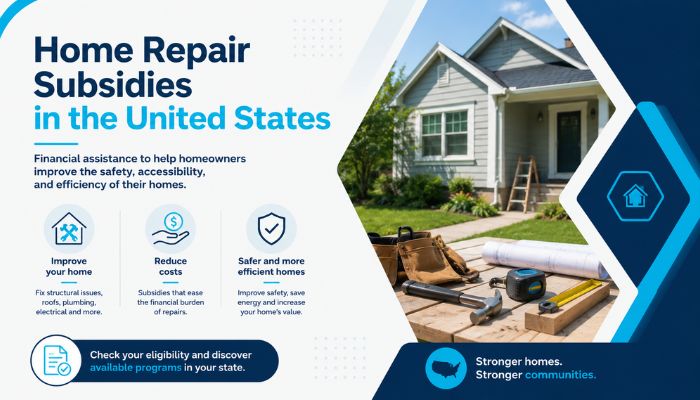
Home repair subsidies are an important form of government financial assistance that helps low-income homeowners maintain safe and livable housing conditions. Across the United States, federal, state, and local programs offer grants, housing assistance, and low-interest loans to help families repair damaged homes, improve energy efficiency, and address critical safety issues.
Learn about: Pell Grant
For many homeowners, unexpected repair costs can become overwhelming. Roof damage, plumbing issues, electrical problems, structural repairs, and heating system failures often require thousands of dollars in expenses that many families cannot afford. Home repair assistance programs help reduce these financial burdens while improving housing stability and community safety.
As housing costs continue to rise, more families are searching for government grants for home repairs, financial help for homeowners, and affordable housing assistance programs.
What Are Home Repair Subsidies?
Home repair subsidies are government-funded financial assistance programs designed to help eligible homeowners pay for necessary repairs and home improvements.
These programs may provide:
- Free home repair grants
- Low-interest home improvement loans
- Emergency repair assistance
- Energy efficiency upgrades
- Accessibility modifications for seniors or disabled individuals
The primary goal is to help families maintain safe housing conditions while preventing property deterioration and housing displacement.
Home repair programs may be offered through:
- Federal housing agencies
- State housing departments
- Local governments
- Nonprofit organizations
- Community development programs
Eligibility requirements and funding availability vary depending on the location and type of assistance requested.
Who Qualifies for Home Repair Assistance?
Qualification for home repair subsidies is often based on:
- Household income
- Age
- Disability status
- Property condition
- Homeownership status
Programs frequently prioritize:
- Low-income homeowners
- Senior citizens
- Disabled individuals
- Veterans
- Rural homeowners
- Families facing financial hardship
Applicants are generally required to live in the property as their primary residence.
Some programs may also focus on repairing homes that present health or safety risks, such as:
- Electrical hazards
- Plumbing failures
- Roof leaks
- Mold issues
- Heating system problems
- Structural damage
Because funding is often limited, many programs operate waiting lists or prioritize emergency situations.
Types of Home Repairs Covered
Home repair subsidy programs may cover a wide range of essential repairs and property improvements.
Roof Repair and Replacement
Roof damage can lead to serious structural problems and water intrusion. Many programs help homeowners pay for roof repairs or full roof replacement services.
Electrical and Plumbing Repairs
Unsafe wiring and plumbing failures can create major health and safety risks. Subsidy programs often help cover:
- Electrical upgrades
- Plumbing repairs
- Water heater replacement
- Sewer line repairs
Heating and Cooling Systems
Programs may assist with:
- Furnace replacement
- HVAC repairs
- Energy-efficient heating systems
- Cooling system installation
These improvements can reduce utility bills and improve home safety.
Accessibility Improvements
Some homeowners may qualify for assistance installing:
- Wheelchair ramps
- Grab bars
- Walk-in showers
- Stair lifts
These modifications help seniors and disabled individuals remain safely in their homes.
Federal Home Repair Assistance Programs
Several federal agencies offer housing repair assistance programs for eligible homeowners.
USDA Rural Development Home Repair Program
The USDA Section 504 Home Repair program provides grants and low-interest loans to very low-income homeowners in rural areas.
Eligible repairs may include:
- Health and safety improvements
- Structural repairs
- Accessibility modifications
- Energy efficiency upgrades
Senior homeowners may qualify for grant assistance that does not need to be repaid under certain conditions.
HUD Home Improvement Programs
The U.S. Department of Housing and Urban Development (HUD) supports community development programs that may offer:
- Housing rehabilitation grants
- Emergency repair funding
- Neighborhood improvement assistance
Many cities and counties receive federal funding to help low-income residents improve housing conditions.
Weatherization Assistance Program
This federal program helps families improve energy efficiency and lower utility costs by providing:
- Insulation upgrades
- Window replacement
- Air sealing services
- Heating system improvements
These energy-saving upgrades can significantly reduce monthly utility expenses.
Benefits of Home Repair Subsidies
Home repair assistance programs provide several important benefits for homeowners and communities.
Improved Safety
Repairing damaged homes helps reduce:
- Fire hazards
- Mold exposure
- Structural collapse risks
- Unsafe living conditions
Financial Relief
Major home repairs are expensive. Subsidies and grants help families avoid financial hardship and reduce the need for high-interest debt.
Increased Property Value
Home improvements can increase property value and preserve neighborhood stability.
Better Energy Efficiency
Energy-efficient upgrades may lower monthly utility bills and reduce household expenses over time.
How to Apply for Home Repair Assistance
Applying for home repair subsidies usually involves contacting local housing agencies, nonprofit organizations, or government offices.
Applicants may need:
- Proof of homeownership
- Income documentation
- Tax records
- Identification documents
- Repair estimates
- Photos of property damage
Some programs may require a home inspection before approving assistance.
Because funding availability can vary throughout the year, homeowners are encouraged to apply early and monitor local housing assistance announcements.
Common Challenges Homeowners Face
Many families struggle to maintain their homes due to rising repair costs and inflation.
Aging Homes
Older properties often require:
- Roof replacement
- Electrical upgrades
- Plumbing repairs
- Structural maintenance
Rising Construction Costs
Labor shortages and material price increases have made home repairs significantly more expensive in recent years.
Limited Savings
Unexpected repair emergencies can quickly overwhelm household budgets, especially for low-income homeowners and retirees living on fixed incomes.
Home repair assistance programs help bridge this financial gap and prevent worsening housing conditions.
Why Home Repair Assistance Matters
Safe and stable housing plays a critical role in family health, financial security, and overall quality of life.
Home repair subsidy programs help:
- Prevent homelessness
- Preserve affordable housing
- Protect vulnerable homeowners
- Improve neighborhood conditions
- Reduce long-term repair costs
Without assistance, many families may be forced to live in unsafe environments or abandon necessary repairs entirely.