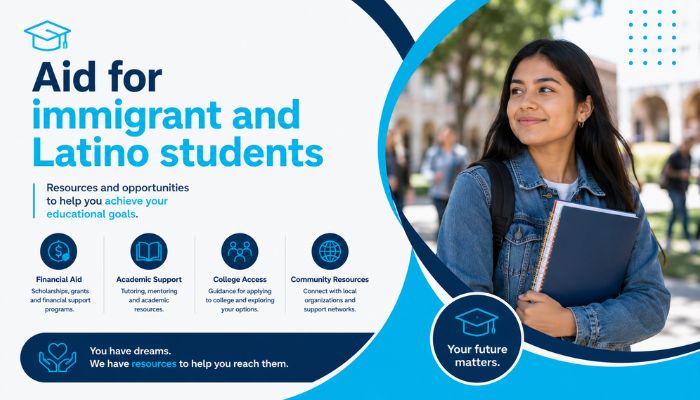
Aid programs for immigrant and Latino students play a critical role in helping thousands of young people access education and achieve academic success in the United States. Many students from immigrant families face financial barriers, language challenges, and limited access to educational resources. Scholarships, government assistance programs, and nonprofit educational initiatives help provide financial support and create opportunities for higher education and career advancement.
Learn about: State Social Assistance Programs
As college tuition and living expenses continue to rise, many Latino and immigrant students search for affordable education options, financial aid for undocumented students, and scholarship opportunities that can help reduce the cost of attending school. These programs support students pursuing college degrees, vocational training, English language education, and professional development.
For families looking for college grants, student financial aid, or scholarships for Hispanic and immigrant students, understanding available resources can open doors to long-term educational and financial success.
Why Educational Aid for Immigrant and Latino Students Is Important
Education remains one of the most powerful tools for improving financial stability and creating career opportunities. However, many immigrant and Latino students face unique obstacles when pursuing higher education in the United States.
Financial Challenges
Many families struggle with:
- High college tuition costs
- Limited household income
- Rising housing expenses
- Lack of access to private student loans
Financial aid programs help reduce these barriers and make education more accessible.
First-Generation College Students
Many Latino students are the first in their families to attend college. As a result, they may have limited guidance about:
- College applications
- Scholarships
- FAFSA requirements
- Financial planning
Educational assistance organizations often provide counseling and mentorship to help students navigate the admissions process.
Language and Cultural Barriers
Some immigrant families face language difficulties or unfamiliarity with the U.S. education system. Community support programs help students and parents better understand available educational opportunities.
Scholarships for Latino Students
Many organizations offer scholarships specifically designed for Hispanic and Latino students pursuing higher education.
Hispanic Scholarship Fund (HSF)
The Hispanic Scholarship Fund is one of the largest scholarship organizations supporting Latino students in the United States.
The program may provide:
- College scholarships
- Career development resources
- Mentorship opportunities
- Financial education support
HSF helps students attending:
- Universities
- Community colleges
- Graduate programs
- Vocational schools
Latino College Scholarships
Additional scholarships are available through:
- Universities
- Nonprofit organizations
- Private foundations
- Community associations
Scholarship opportunities may focus on:
- Academic achievement
- Financial need
- Leadership skills
- Community involvement
These programs help reduce student debt and improve access to higher education.
Financial Aid for Immigrant Students
Many immigrant students may qualify for financial assistance programs depending on their immigration status and state policies.
FAFSA and Federal Student Aid
Eligible students may apply for:
- Federal grants
- Pell Grants
- Work-study programs
- Federal student loans
The Free Application for Federal Student Aid (FAFSA) is one of the most important tools for accessing college financial assistance.
State Financial Aid Programs
Some states offer:
- Tuition assistance
- In-state tuition benefits
- State-funded scholarships
- Financial aid for undocumented students
States such as California, Texas, and New York have created programs that support immigrant and DACA students pursuing higher education.
Support for DACA and Undocumented Students
Undocumented students and Deferred Action for Childhood Arrivals (DACA) recipients often face additional financial and legal barriers when pursuing college education.
Private Scholarships
Many private organizations provide scholarships specifically for:
- DACA recipients
- Undocumented students
- First-generation immigrants
These scholarships help students cover:
- Tuition
- Books
- Housing expenses
- Educational supplies
Community Organizations
Nonprofit groups may also offer:
- Legal assistance
- College counseling
- Career mentorship
- Leadership development programs
Support networks play an important role in helping immigrant students overcome educational obstacles.
English Language and Career Training Programs
Educational support is not limited to traditional college programs. Many immigrant students and adults benefit from English language and vocational training services.
ESL Programs
English as a Second Language (ESL) classes help students improve:
- Reading skills
- Writing abilities
- Communication skills
- Academic readiness
Strong English skills can improve educational outcomes and future job opportunities.
Career and Technical Education
Vocational training programs help students prepare for careers in fields such as:
- Healthcare
- Technology
- Construction
- Business administration
- Skilled trades
Career-focused education can lead to higher-paying jobs and long-term financial stability.
Benefits of Educational Assistance Programs
Educational aid programs provide significant advantages for immigrant and Latino students.
Reduced Financial Stress
Scholarships and grants help students avoid excessive student loan debt and reduce financial pressure on families.
Increased Graduation Rates
Students with financial and academic support are more likely to:
- Complete college degrees
- Continue higher education
- Achieve career success
Career Advancement Opportunities
Higher education and specialized training can improve:
- Employment opportunities
- Earning potential
- Long-term financial security
These programs contribute to stronger communities and economic growth.
How to Apply for Student Aid and Scholarships
Students interested in educational assistance programs should begin researching opportunities early.
Common Application Requirements
Applicants may need:
- Academic transcripts
- Proof of income
- Essays or personal statements
- Letters of recommendation
- FAFSA information
- Community service records
Because deadlines vary, students should stay organized and apply for multiple scholarship opportunities whenever possible.
Helpful Resources
Students can explore:
- School counseling offices
- College financial aid departments
- Community organizations
- Scholarship databases
- Nonprofit educational programs
Seeking guidance from mentors and advisors can improve the chances of receiving financial aid.
Why Aid for Immigrant and Latino Students Matters
Educational assistance programs help create equal opportunities for students from diverse backgrounds.
These programs:
- Expand access to higher education
- Reduce financial inequality
- Support workforce development
- Strengthen immigrant communities
- Encourage economic mobility
Without scholarships and financial aid, many talented students would struggle to pursue educational goals and career advancement opportunities.