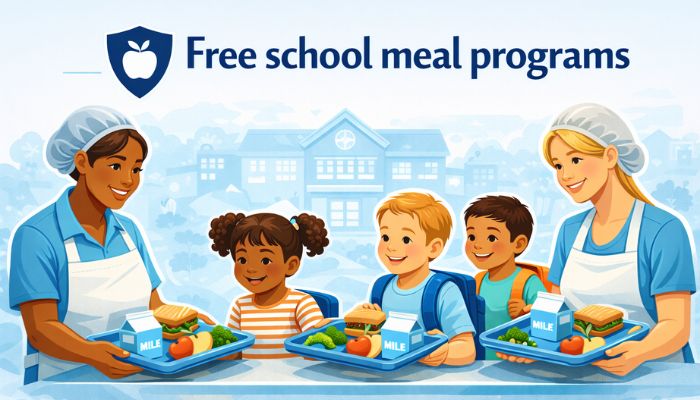
Free school meal programs play a critical role in supporting millions of children and low-income families across the United States. These government-funded nutrition assistance programs help students access healthy breakfasts and lunches during the school day, ensuring children receive the nourishment they need to learn, grow, and succeed academically.
As food prices and household expenses continue to rise, many families struggle to provide consistent nutritious meals for their children. School meal assistance programs help reduce food insecurity while also improving student health, concentration, and classroom performance.
For parents searching for government food assistance, free lunch programs, or school nutrition benefits, understanding how these programs work can provide valuable financial relief and educational support.
What Are Free School Meal Programs?
Free school meal programs are federally funded initiatives designed to provide healthy meals to eligible students at low or no cost. These programs are managed primarily through the U.S. Department of Agriculture (USDA) and operated by participating schools and school districts nationwide.
The two most common programs include:
- National School Lunch Program (NSLP)
- School Breakfast Program (SBP)
These programs help children receive balanced meals that meet federal nutrition guidelines while reducing the financial burden on families.
School meal programs may provide:
- Free breakfast
- Free lunch
- Reduced-price meals
- Summer meal assistance
- After-school snacks in some areas
Millions of students rely on these services every year, particularly those living in low-income households.
Who Qualifies for Free School Meals?
Eligibility for free or reduced-price school meals is generally based on household income and family size.
Students may qualify if their household income falls within federal income guidelines. Families receiving government assistance programs such as:
- SNAP benefits
- TANF assistance
- Medicaid in some states
may automatically qualify for meal assistance.
Additional groups often eligible include:
- Foster children
- Homeless students
- Migrant children
- Runaway youth
Some school districts also participate in special community eligibility programs that allow all students to receive free meals regardless of household income.
Because eligibility requirements may change annually, families should review local school district guidelines each school year.
Benefits of Free School Meal Programs
School nutrition assistance provides significant benefits for both students and parents.
Improved Academic Performance
Children who receive nutritious meals at school are often better able to:
- Concentrate in class
- Participate in learning activities
- Maintain energy levels
- Improve attendance
- Achieve stronger academic performance
Proper nutrition supports cognitive development and helps students stay focused throughout the school day.
Financial Relief for Families
For many households, school meal assistance reduces monthly grocery expenses and helps families manage rising living costs.
Parents can save hundreds or even thousands of dollars annually through free breakfast and lunch programs.
Better Child Health and Nutrition
School meals are designed to meet federal nutritional standards and often include:
- Fruits and vegetables
- Whole grains
- Lean protein
- Low-fat dairy products
These balanced meals help support healthy growth and reduce childhood hunger.
National School Lunch Program (NSLP)
The National School Lunch Program is one of the largest federal child nutrition programs in the United States.
How the Program Works
Participating schools provide low-cost or free lunches to eligible students each school day.
Meals typically include:
- Protein sources
- Fruits
- Vegetables
- Milk
- Whole grains
The USDA reimburses schools for each meal served under the program.
Why the Program Is Important
The National School Lunch Program helps millions of children access healthy meals regardless of their family’s financial situation.
For many students, school lunch may be the most nutritious meal they receive during the day.
School Breakfast Program (SBP)
The School Breakfast Program provides free or reduced-price breakfasts to students before classes begin.
Benefits of School Breakfast
Research shows that students who eat breakfast are more likely to:
- Perform better academically
- Improve concentration
- Have better attendance
- Experience fewer behavioral issues
School breakfast programs help ensure children begin the day with the nutrition necessary for learning and development.
Summer Meal Programs for Children
Many children rely on school meals during the academic year, which can create challenges during school breaks.
To address this issue, the federal government supports summer food assistance programs that provide free meals to eligible children during vacation periods.
Summer Nutrition Programs May Include:
- Free lunches at community centers
- Mobile meal distribution
- Summer school meal services
- Community feeding programs
These services help reduce childhood hunger when school is not in session.
How to Apply for Free School Meals
Families can usually apply for meal assistance through their local school district.
Applications often require:
- Proof of household income
- Information about family size
- Participation in government assistance programs
- Student enrollment information
Many school districts now offer online applications that simplify the process for parents.
Because approval may take time, families are encouraged to apply before the school year begins whenever possible.
Why Free School Meals Matter
Childhood hunger continues to affect millions of families across the United States. Rising food prices, housing costs, and economic instability have increased the demand for nutrition assistance programs.
Free school meal programs help:
- Reduce food insecurity
- Improve child health
- Support educational success
- Ease financial pressure on parents
- Promote equal learning opportunities
These programs are especially important for low-income families struggling to balance household expenses while ensuring their children receive healthy meals every day.
Community Eligibility Provision (CEP)
Some schools participate in the Community Eligibility Provision, which allows all students to receive free meals without individual applications.
Advantages of CEP
This program:
- Reduces paperwork for families
- Eliminates meal-related stigma
- Increases student participation
- Expands access to nutritious food
Community-wide meal access helps ensure that every child has an equal opportunity to succeed academically.