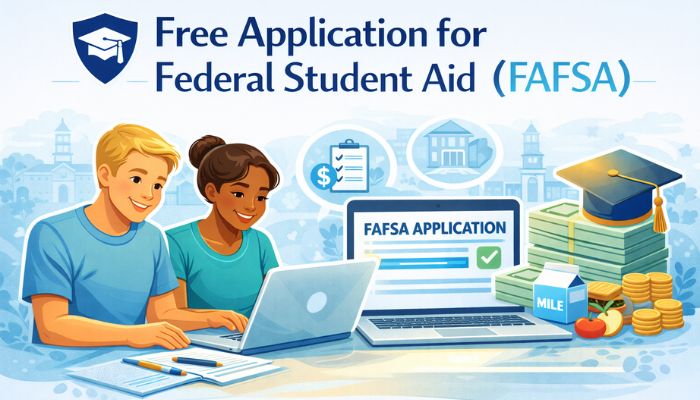
The Free Application for Federal Student Aid (FAFSA) is one of the most important financial aid applications for students seeking affordable higher education in the United States. Every year, millions of students complete the FAFSA to apply for federal grants, student loans, scholarships, and work-study opportunities that can help reduce the cost of college.
You might be interested in: Financial Assistance for Workers Facing Job Loss
As tuition and living expenses continue to rise, understanding how FAFSA works has become essential for students and families searching for college financial aid, free education grants, and affordable university options. Completing the FAFSA can open the door to significant financial assistance and make higher education more accessible for low-income and middle-income households.
For students planning to attend college, trade schools, or career training programs, FAFSA is often the first and most important step toward receiving financial aid.
What Is FAFSA?
FAFSA stands for Free Application for Federal Student Aid. It is the official application used by the U.S. Department of Education to determine a student’s eligibility for federal financial aid programs.
The FAFSA is used to apply for:
- Pell Grants
- Federal student loans
- Federal work-study programs
- State financial aid
- Institutional scholarships
- Need-based college grants
Many colleges and universities also use FAFSA information to award their own financial aid packages.
Because the application is free, students should avoid paying third-party companies that claim to submit FAFSA forms on their behalf.
Why FAFSA Is Important
The FAFSA plays a major role in helping students afford higher education expenses.
Access to Free College Grants
Many students qualify for Pell Grants and other need-based aid that does not require repayment.
This can significantly reduce student loan debt and lower overall education costs.
Eligibility for Scholarships
Some schools and organizations require FAFSA completion before students can qualify for scholarships and tuition assistance programs.
Federal Student Loan Access
FAFSA also allows students to access federal student loans, which often offer:
- Lower interest rates
- Flexible repayment plans
- Loan forgiveness options
- Deferred payment opportunities
Federal loans are generally considered safer and more affordable than many private student loans.
Who Should Complete the FAFSA?
Nearly every student planning to pursue higher education should complete the FAFSA, regardless of income level.
Students attending the following institutions may qualify:
- Universities
- Community colleges
- Trade schools
- Technical schools
- Career training programs
Even families who believe they may not qualify for financial aid are encouraged to apply because some assistance programs do not have strict income limits.
Eligible Applicants May Include:
- High school seniors
- Undergraduate students
- Graduate students
- Adult learners returning to school
- Part-time students
Completing the FAFSA can help students maximize available financial aid opportunities.
Information Needed to Complete FAFSA
Students and parents may need several documents to complete the FAFSA accurately.
Common FAFSA Requirements
Applicants may need:
- Social Security numbers
- Federal income tax returns
- W-2 forms
- Bank account information
- Records of investments or assets
- Driver’s license information
- School codes for selected colleges
Dependent students usually must provide parental financial information as part of the application.
Using accurate information is important because mistakes can delay financial aid processing.
How FAFSA Determines Financial Aid Eligibility
The federal government uses FAFSA information to calculate a student’s financial need.
Several factors are considered, including:
- Household income
- Family size
- Number of family members attending college
- Assets and savings
- Cost of attendance
The information is used to calculate the Student Aid Index (SAI), which helps schools determine how much aid a student may receive.
Students with greater financial need often qualify for larger grants and need-based aid packages.
FAFSA Deadlines and Application Timing
One of the most important parts of the FAFSA process is applying early.
Why Early FAFSA Submission Matters
Many financial aid programs distribute funds on a first-come, first-served basis. Applying early can increase the chances of receiving:
- Pell Grants
- State grants
- School-based scholarships
- Work-study opportunities
Missing deadlines could reduce the amount of financial aid available.
Federal and State Deadlines
Each state and college may have different FAFSA deadlines, so students should check requirements carefully.
The FAFSA application typically opens annually for the upcoming academic year.
Common Types of Financial Aid Available Through FAFSA
Completing the FAFSA may help students access several types of educational funding.
Pell Grants
Pell Grants provide free money for college and usually do not need repayment.
Federal Student Loans
Students may qualify for subsidized or unsubsidized federal loans with flexible repayment terms.
Work-Study Programs
Federal work-study programs provide part-time jobs that help students earn money while attending school.
State and Institutional Aid
Many states and colleges use FAFSA data to award their own grants and scholarships.
Combining multiple financial aid sources can dramatically reduce college expenses.
Common FAFSA Mistakes to Avoid
Errors on the FAFSA can delay aid processing or reduce eligibility.
Incorrect Personal Information
Students should carefully verify:
- Names
- Social Security numbers
- Birth dates
- Tax information
Missing Deadlines
Late applications may result in reduced aid opportunities.
Failing to Sign the FAFSA
Both students and parents may need to electronically sign the application before submission.
Not Listing Enough Schools
Students can send FAFSA information to multiple colleges, increasing financial aid opportunities.
Taking time to review the application carefully can help avoid costly mistakes.
Why FAFSA Matters for the Future
Higher education costs continue to increase across the United States, making financial aid more important than ever.
FAFSA helps students:
- Access affordable education
- Reduce student loan debt
- Pursue career opportunities
- Improve long-term earning potential
- Achieve financial independence
For many families, financial aid makes the difference between attending college or delaying educational goals.
Tips for Maximizing Financial Aid
Students can improve their chances of receiving aid by following several important strategies.
Apply Early
Submitting FAFSA as soon as possible can increase access to limited aid programs.
Research Additional Scholarships
Students should combine FAFSA with private scholarship opportunities whenever possible.
Maintain Good Academic Standing
Strong academic performance may improve eligibility for institutional scholarships and grants.
Update Financial Information Accurately
Keeping financial records organized can simplify future FAFSA renewals.