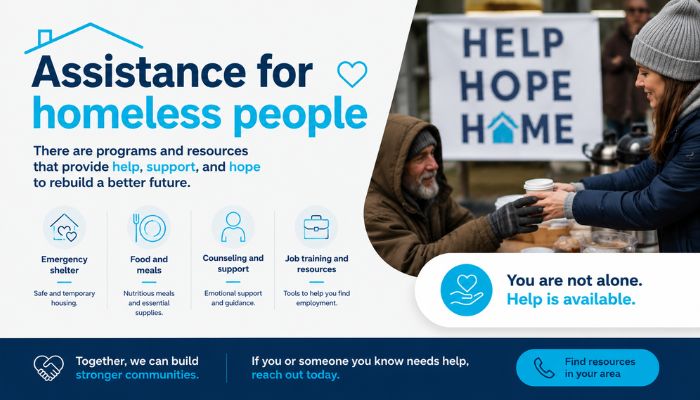
Homeless assistance programs in the United States provide critical support for individuals and families experiencing housing instability, financial hardship, and emergency living situations. These government-funded and nonprofit assistance programs help vulnerable populations access temporary shelter, affordable housing, food assistance, healthcare services, and employment support.
Find out about: Home Repair Subsidies in the United States
As housing costs continue to rise across the country, homelessness has become a growing issue affecting millions of Americans. Families facing eviction, job loss, medical emergencies, or economic hardship often struggle to maintain stable housing. Homeless assistance services help provide immediate relief while supporting long-term housing stability and self-sufficiency.
For people searching for emergency housing assistance, rental help programs, or shelters for homeless families, understanding available resources can be an important first step toward recovery and stability.
What Is Homeless Assistance?
Homeless assistance includes a variety of government and community programs designed to support people who:
- Lack stable housing
- Live in shelters or temporary housing
- Face eviction
- Sleep in cars or public spaces
- Experience severe housing insecurity
These programs aim to provide both immediate emergency support and long-term solutions that help individuals regain financial independence and permanent housing.
Homeless assistance services may include:
- Emergency shelters
- Transitional housing
- Rental assistance
- Food programs
- Mental health services
- Healthcare support
- Job training
- Case management services
Many programs also focus on helping families, veterans, seniors, youth, and individuals with disabilities who are at higher risk of homelessness.
Common Causes of Homelessness
Homelessness can affect people from many different backgrounds and income levels. Several factors contribute to housing instability in the United States.
Rising Housing Costs
In many cities, rent prices and home costs have increased faster than wages, making affordable housing difficult to access.
Job Loss and Financial Hardship
Unexpected unemployment, reduced work hours, or economic downturns can quickly create financial emergencies for families living paycheck to paycheck.
Medical Expenses
Serious illnesses, disabilities, or high healthcare costs may lead to overwhelming debt and housing instability.
Domestic Violence
Victims of domestic abuse often leave unsafe living situations without financial resources or stable housing options.
Mental Health and Substance Use Challenges
Some individuals experiencing homelessness also struggle with untreated mental health conditions or substance abuse disorders, which can make finding stable housing more difficult.
Understanding these challenges helps explain why homeless assistance programs remain essential in many communities.
Emergency Shelter Programs
Emergency shelters provide temporary housing and immediate protection for individuals and families facing homelessness.
What Shelters May Provide
Many shelters offer:
- Safe sleeping accommodations
- Meals and food assistance
- Hygiene facilities
- Clothing donations
- Case management services
- Referrals to housing programs
Some shelters specifically serve:
- Families with children
- Women escaping domestic violence
- Veterans
- Youth experiencing homelessness
- Senior citizens
Emergency shelters often act as the first point of contact for individuals seeking long-term housing support.
Transitional and Permanent Housing Assistance
Beyond emergency shelters, many programs focus on helping people move into stable long-term housing.
Transitional Housing Programs
These programs provide temporary housing combined with support services such as:
- Employment counseling
- Financial education
- Mental health support
- Substance abuse treatment
Transitional housing allows individuals to rebuild financial stability while living in a supportive environment.
Permanent Supportive Housing
Permanent supportive housing combines affordable housing with ongoing social services for individuals facing chronic homelessness or disabilities.
This model helps people maintain stable housing while receiving medical, mental health, and case management support.
Rental Assistance Programs
Rental assistance programs help low-income families avoid eviction and maintain stable housing.
Housing Choice Voucher Program (Section 8)
This federal housing assistance program helps eligible families pay a portion of their monthly rent.
Participants can often choose housing in the private rental market while receiving government financial support.
Emergency Rental Assistance
Some local programs provide temporary funding to help families:
- Pay overdue rent
- Avoid eviction
- Cover utility bills
- Resolve housing emergencies
These programs became especially important during economic crises and periods of rising inflation.
Healthcare and Mental Health Support
Many homeless assistance organizations recognize that stable housing and healthcare are closely connected.
Programs may provide:
- Medical care
- Mental health counseling
- Substance abuse treatment
- Prescription medication assistance
- Health insurance enrollment support
Access to healthcare services can improve long-term outcomes and help individuals maintain stable housing.
Employment and Financial Assistance
Finding stable employment is often a key step toward overcoming homelessness.
Job Training Programs
Many organizations offer:
- Resume assistance
- Interview preparation
- Career counseling
- Vocational training
- Workforce development programs
Financial Counseling
Case managers may help individuals:
- Create budgets
- Improve credit
- Access public assistance programs
- Apply for government benefits
These services help people rebuild financial independence and reduce the risk of future homelessness.
Homeless Assistance for Families and Children
Families with children face unique challenges when experiencing housing instability.
Programs for families may include:
- Family shelters
- School support services
- Childcare assistance
- Nutritional programs
- Transportation support
Stable housing is especially important for children because homelessness can negatively affect:
- Academic performance
- Emotional well-being
- Physical health
- Social development
Helping families maintain housing stability supports healthier outcomes for children and parents alike.
How to Apply for Homeless Assistance
Individuals seeking homeless assistance can contact:
- Local housing agencies
- Community action organizations
- Emergency shelters
- Social service departments
- Nonprofit housing organizations
Applicants may need:
- Identification documents
- Proof of income
- Eviction notices
- Medical records in some cases
- Information about household members
Many communities also operate homeless assistance hotlines and outreach centers that help connect individuals with available resources.
Why Homeless Assistance Programs Matter
Homeless assistance programs help communities reduce poverty, improve public health, and support vulnerable populations.
These programs:
- Prevent housing instability
- Reduce emergency healthcare costs
- Improve employment opportunities
- Support family stability
- Help individuals regain independence
Without housing assistance services, many individuals and families would face greater risks of long-term homelessness and severe financial hardship.