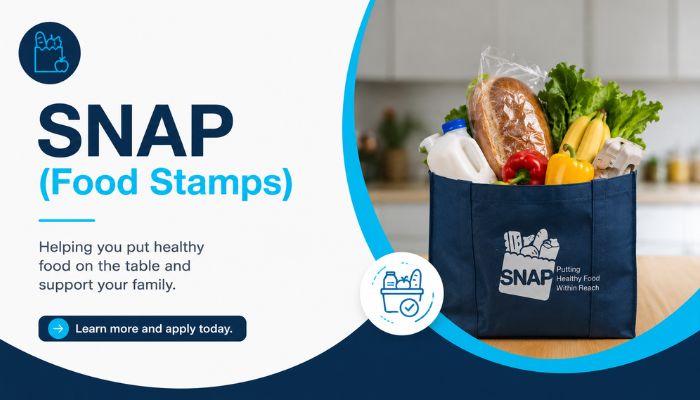
Navigating the complexities of government assistance can be challenging, especially when you are trying to secure nutritional support for your family. The Supplemental Nutrition Assistance Program (SNAP), formerly and still commonly known as food stamps, serves as America’s largest and most vital hunger safety net. Millions of low-income individuals and families rely on this federal program every month to access healthy, affordable food.
Learn about: Chip perinatal
If you are looking to understand eligibility requirements, maximize your monthly allotment, or discover how the program impacts local economies, this comprehensive guide covers everything you need to know about navigating the SNAP benefits system today.
What is SNAP and How Does the Food Stamp Program Work?
The Supplemental Nutrition Assistance Program (SNAP) is a federal program administered by the United States Department of Agriculture (USDA) Food and Nutrition Service, though it is operated at the state level by local social service agencies.
The Evolution from Paper Coupons to EBT Cards
Gone are the days of physical paper coupons. Today, SNAP benefits are distributed electronically through the Electronic Benefits Transfer (EBT) card. The EBT card functions exactly like a commercial debit card. Each month, your state government deposits your approved funds directly onto the card, which can then be used at authorized retail food stores nationwide.
Why SNAP Matters for Low-Income Families
SNAP is designed to raise nutritional levels among low-income households. By offsetting a significant portion of a household’s grocery budget, the program frees up vital income for other essential living expenses, such as housing, utility bills, medical care, and prescription drugs.
Navigating SNAP Eligibility Requirements and Income Limits
Securing food assistance requires meeting specific financial and non-financial criteria set by federal and state regulations. Understanding these benchmarks is the first step toward a successful application.
Income Eligibility Standards: Gross vs. Net Income
To qualify for government food assistance, a household must generally meet two distinct income tests:
-
Gross Monthly Income: A household’s total, unconditional income before any taxes or deductions are taken out. This must generally be at or below 130% of the Federal Poverty Level (FPL).
-
Net Monthly Income: The remaining income after allowable deductions—such as high shelter costs, childcare expenses, and medical deductions for the elderly—are calculated. This must be at or below 100% of the Federal Poverty Level.
Resource and Asset Limits
In addition to income restrictions, some states enforce resource limits. Countable assets typically include cash on hand, checking and savings accounts, and certain types of property. However, many states have implemented Broad-Based Categorical Eligibility (BBCE), which relaxes or entirely eliminates asset tests to streamline the approval process for families in need.
Special Rules for Able-Bodied Adults Without Dependents (ABAWD)
If you are an able-bodied adult between the ages of 18 and 54 without dependents, special work requirements apply. ABAWD individuals are generally limited to receiving SNAP benefits for only 3 months within a 36-month period unless they meet specific work requirements, such as working or participating in an approved work program for at least 80 hours per month.
Maximizing Your EBT Card: What Can You Actually Buy?
Understanding how to allocate your SNAP funds efficiently is essential for maintaining a healthy household budget. The USDA enforces strict guidelines regarding eligible and ineligible items.
Approved Food Items for a Healthy Diet
Your EBT card benefits can be used to purchase a wide variety of nutritional items designed for home consumption, including:
-
Fruits, vegetables, fresh herbs, and canned goods.
-
Meat, poultry, fish, and alternative plant-based proteins.
-
Dairy products, including milk, cheese, and yogurt.
-
Breads, cereals, grains, and baking essentials.
-
Seeds and plants that produce food for the household to eat.
Prohibited Items Under Federal Guidelines
SNAP benefits are strictly reserved for human food consumption. You cannot use your EBT card to purchase:
-
Beer, wine, liquor, or tobacco products.
-
Vitamins, medicines, and dietary supplements (any item with a «Supplement Facts» label).
-
Live animals (with minor exceptions for fresh seafood).
-
Hot, prepared foods intended for immediate consumption at the point of sale.
-
Non-food items such as pet food, cleaning supplies, paper products, and cosmetics.
How to Apply for Food Assistance Online
The application process has become increasingly streamlined, allowing applicants to submit paperwork without long wait times at local welfare offices.
Step-by-Step Online Application Process
-
Locate Your State Agency: Visit the official USDA Food and Nutrition Service website to find your specific state’s online portal (e.g., CalFresh in California, Lone Star in Texas).
-
Submit an Application Form: Fill out the comprehensive form detailing your household size, income, expenses, and asset information.
-
Complete the Interview: Most states require a brief telephone interview with a caseworker to verify your information.
-
Provide Verification Documents: Upload required proof, including pay stubs, rent receipts, utility bills, and government-issued identification.
The Economic and Social Impact of SNAP
«According to USDA research, every $1.00 spent in federal SNAP benefits during an economic downturn generates approximately $1.50 to $1.80 in local economic activity.»
Beyond individual relief, SNAP acts as an economic multiplier. When low-income households spend their benefits quickly at local grocery stores, supermarkets, and farmers’ markets, they inject cash directly into the local food supply chain, supporting agricultural jobs, retail workers, and transportation networks nationwide.
By applying for SNAP, you are not only securing your family’s health and nutrition, but you are also participating in a highly efficient program that strengthens communities from the ground up. Take control of your financial health and explore your eligibility options today.